16 October 2010

The first self reflection

The first leg of the journey is over and I’ve reached my temporary final destination in Beijing. Now it’s time to change travelling buddies, destination, climate and language. At least for this trip the currency, time zone and way of travelling will still remain the same. Next stop: Tibet, Mt. Kailash and Mt. Everest. For three weeks we’ll be trekking thru Tibet and the Himalayas. I don’t know what to expect apart from cold weather, a tense history as well as present, a hidden non-recognized culture, sore muscles, hard hikes and loads of fun. I can’t wait to be on the top of the world!

Looking back on the first couple of weeks of my trip, I’m somewhat amazed about how much you can learn about yourself in such a short period of time. I bet by the time I get home I’ll probably rediscovered a whole new me… So far it’s not the grand revelations, but more so small things that I never had to actually encounter to rethink.

First of all I’ve finally admitted to myself that I’m not a big city person who likes running from one tourist attraction to the next. In most of the larger cities we’ve visited so far, there’s been a time limit on how long we have to do the “mandatory” tourist sites. From one museum to the other, then a building that played an important role some time ago in the country’s history, before you head off to one of the three wonderful cathedrals the city rightfully can brag about. I had to get to Beijing before I actually looked in the mirror and asked the question: “why?” I’ve thought a lot about it and come to the conclusion that travelling thru certain cities comes with an expectancy of things you are suppose to do. You can’t go to Paris without seeing the Eiffel Tower, New York without Times Square, Kuala Lumpur without the Twin Towers, Beijing without the Great Wall, etc. These “rules” have been made up along the way and have become huge income sources for both private and state driven corporations. It’s amazing how much you can milk a tourist attraction like the Great Wall; there is no end to it! Today’s society created this monster called need-to-see-places, and if you don’t do what is unconsciously expected of you, you’ll be the odd one out who gets all the “whats” and “whys”, which one of course have to answer over and over again. I won’t deny that I wouldn’t be without the wonderful experience we had at the Great Wall (both times), but when reflecting around the reasons I do these things in the first place, I strongly dislike concluding that my to-do-tourist-o’meter is on autopilot. I started to dread coming to a new city where there were more to-dos, but it only took me a few second thoughts before I had a chuckle and decided to be both a sheep in the herd and the odd one out. I figure it’s a doable combination.

Second of all I’ve experienced how affected I get by being around grumpy and ppl who lack the ability to smile. The transition from Russia to Mongolia was enormous, and in fear of turning into a cliché, it truly was night and day. After about 10 days in Russia where smiling, not to mention laughing, I believe is prohibited, coming to Mongolia where you were greeted with a smile and a friendly face seemed like you had died and gone to heaven. The level of service and friendliness I experienced in Russia was next to nothing. If you politely asked them something in English with a spasiba added to it, they’d give you the famous sigh and a reply in Russian. Another example would be if you only had big bills to pay a smaller sum. Once again the sigh was to be expected. Turns out Russia isn’t all that interested in tourism and their way of thinking seems to be that we’re lucky to have them as opposed to they’re lucky to have us. This we encountered numerous times while working our way thru Russia, not to mention the restaurant cart at the Trans-Siberian which eventually turned into a farce. In order to underline how extremely non-tourist friendly it is, let me mention that there is no tourist office in Moscow (!). Honestly, we all agreed that Russian politeness is an oxymoron. I tried to ignore the feeling of not being welcomed and just go with it for the most of the time, but I didn’t understand how much it had affected me before I got to UB. It felt like waking up to life again after feeling suppressed and uncomfortable – which had become the natural state – and coming to understand how much impact a smile, friendliness and a kind word really have on me.

First lessons have been learned, and meeting and greeting ppl all along the way will most likely put me into quite a few situations where self reflection is inevitable and almost required. As long as there’s a smile along the way, I know I’ll do fine.

Mongolia

So as I’m sitting on the Trans-Mongolian train in the middle of nowhere, I’m trying to digest my days in Mongolia. I look out the window and realize once again that I’m a long way away from home. In the distance I can see the contours of the mountains and every now a then a small house passes by. I feel like jumping off the train and go knock on the door to figure out who lives out here in the middle of the desert. Apart for these few glimpses of life, I have the joy of watching numerous flocks of wild horses running and playing as the train passes by. What a sight!

The first word that popped into my mind when we arrived in Mongolia was “chaos”. We arrived late at night by train to a small city. We got off the train and rushed into the waiting room due to the lack of degrees above zero. Needless to say, we stood quite out as we stumbled shivering into the small area which already was crowded as it was. A Canadian travelling with us, being 1,90 m had Mongolians walking past him deliberately, only to look up at him and his enormous height (Mongolians average at barely 1,60 m). We then huddled up to find the closest store to get some piv (Mongolian for beer). We found a small house with piv, vodka, water and cookies and had our needs fulfilled. This place was also extremely crowded and waiting ones turn didn’t seem like something they were familiar with. We – aka the happy campers – got our piv, returned to the train and had ourselves a “hurray-we’re-in-Mongolia-vodka-and-piv-party”.  The happy campers had strangely enough turned into tired campers when we woke up bright and early the next day at our final destination Ulaanbaatar.

I’ve been asking myself what there is to say about Ulaanbaatar (UB), and I haven’t come to a conclusion yet. It’s a surprisingly metropolitan city, but the distance between the urban and rural, rich and poor is disturbing. We went for a walk to see a temple with a 25 m high Buddha statue in it which was a few blocks away from the main square. As we passed a densely trafficked road (which btw is dangerous since red light apparently means “go” and so does green!), we came to realize that we had taken a step into the part of UB that had not yet encountered the globalized touch other parts had. It was as if we had walked off one stage and on to another, without knowing there’d be a difference, but in reality the road separated two world; where the earthly soil was a trashcan, asphalt had turned into dust and solid brick houses was replaced by a shed barely staying upright with the help of a few nails and in a few cases, ropes. Several times we turned around more or less to double check that this was reality and that we were still in the same city we’d been in a few minutes ago. All in all, UB It’s a city filled with many random smells, exhaust and layers of dust, not to mention the random hazardous holes in on the street that kept popping up around the corners every now and then. I soon came to call it little India.  To be fare thou, I hardly saw anyone begging on the street. My impressions adds up to conclude that it’s a city preparing for tourism, doing its best to become what the west wants it to be so they’ll make the effort of visiting Mongolia. In many ways I’ve come to feel it’s a city trying to run before it can walk.

The reason I’ve always wanted to go to Mongolia was to go horseback riding, and I did. We went up to a Ger camp inside the Mongolian national park, which is absolutely one of the most wonderful experiences I’ve ever had. We lived and slept in a jert which is a very basic tent/cabin with a couple of beds, an oven and a table; no electricity and no heating except for the oven. The jert has the form of a circle held up by several wooden sticks connected in the center of the ceiling and the outer walls. The walls are made out of lattice covered with layers of felt and plastic to keep it dry and warm. I actually find it an amazing lifestyle when one keeps in mind that ppl live in these small houses all winter with degrees creeping to below 40 degrees. Apart for eating wonderful homemade Mongolian food – which is some of the best food I’ve ever had – we went horseback riding in a landscape as mesmerizing as I’ve ever seen. The scenery is rocky and dramatic, but at the same time smoothly outlined and covered in a non-typical mountainous dust-like color. What surprised me the most is how I expected the mountains to be bare, which was not the case. Turns out the ground is covered by nothing except for weeds and a small bush here and there, and the trees are located up in the rocky mountainsides. At a point we all stopped taking pictures, agreeing that a picture would be a disgrace to the wonderful sight, since there is no way a photo could capture what we were experiencing.  So far, this is the most wonderful experiences I’ve had and one of the most spectacular sights my eyes have ever seen.

The sun is setting in the Gobi desert, and I’m grateful for my front row seat to this magnificent sight onboard the Trans-Mongolian railway. I only hope that my journey thru life will bring me back here one day.  

18 September 2010

Heaven in Siberia

We arrived in Irkutsk at 0616 local time (0116 Moscow time) and had gotten somewhat adjusted to the time difference. It’s about + 3 degrees outside, which is what we’ve decided to call fresh. We had a mini-van picking us up where we had a Russian guide who actually spoke English (that’s a first!). She kept going on and on about Irkutsk and Lake Baikal; information we would get repeated the next day. Needless to say, I was a bit tired, so I plugged in my iPod, closed my eyes and tried to relax. It was pitch black outside as it was still fairly early, but as time passed (it’s roughly a two hour drive to Lake Baikal and Listvyanka) night turned to day. I could see the sky getting lighter, and the early morning sky was playing hide and seek with me amongst the trees in the Siberian forest. My iPod was playing a James Horner tune, “the Rose”, and just as the song reached its climax the trees disappeared and the hillside lay open bathing in the morning sunrise. The silhouette of a few trees could still be spotted, but had a hard time getting attention next to the colorful picture the sky had turned in to. Going from almost white, to light blue, bright yellow towards darker yellow before it turned into peachy orange, then red and finally numerous shades of pink. I’m certain I saw a glimpse of heaven.

Knowing I’m only seven days into my long journey, I’ve come to realize that I’ll probably get quite a few samples of heavenliness along the way.

Life in Siberia

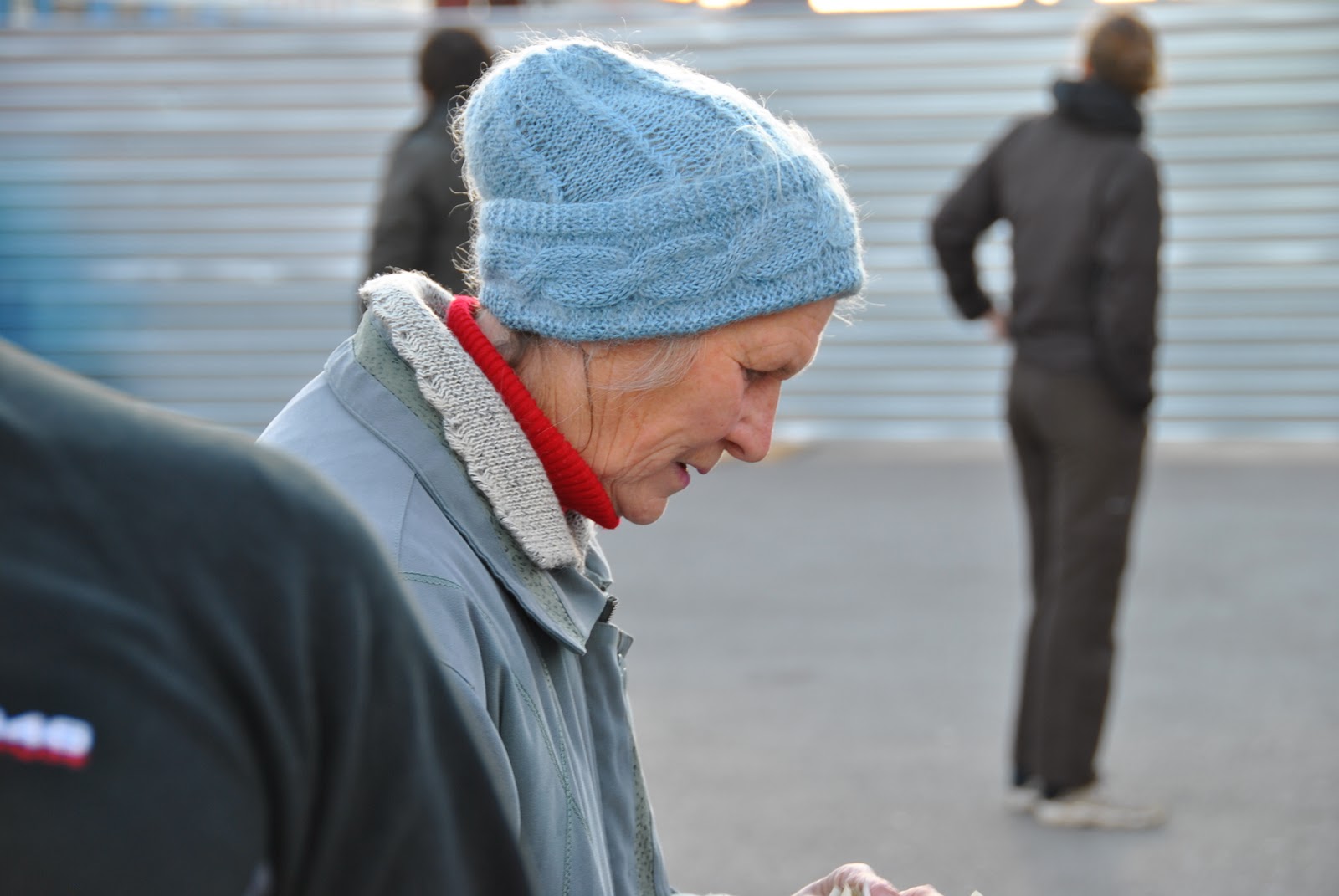
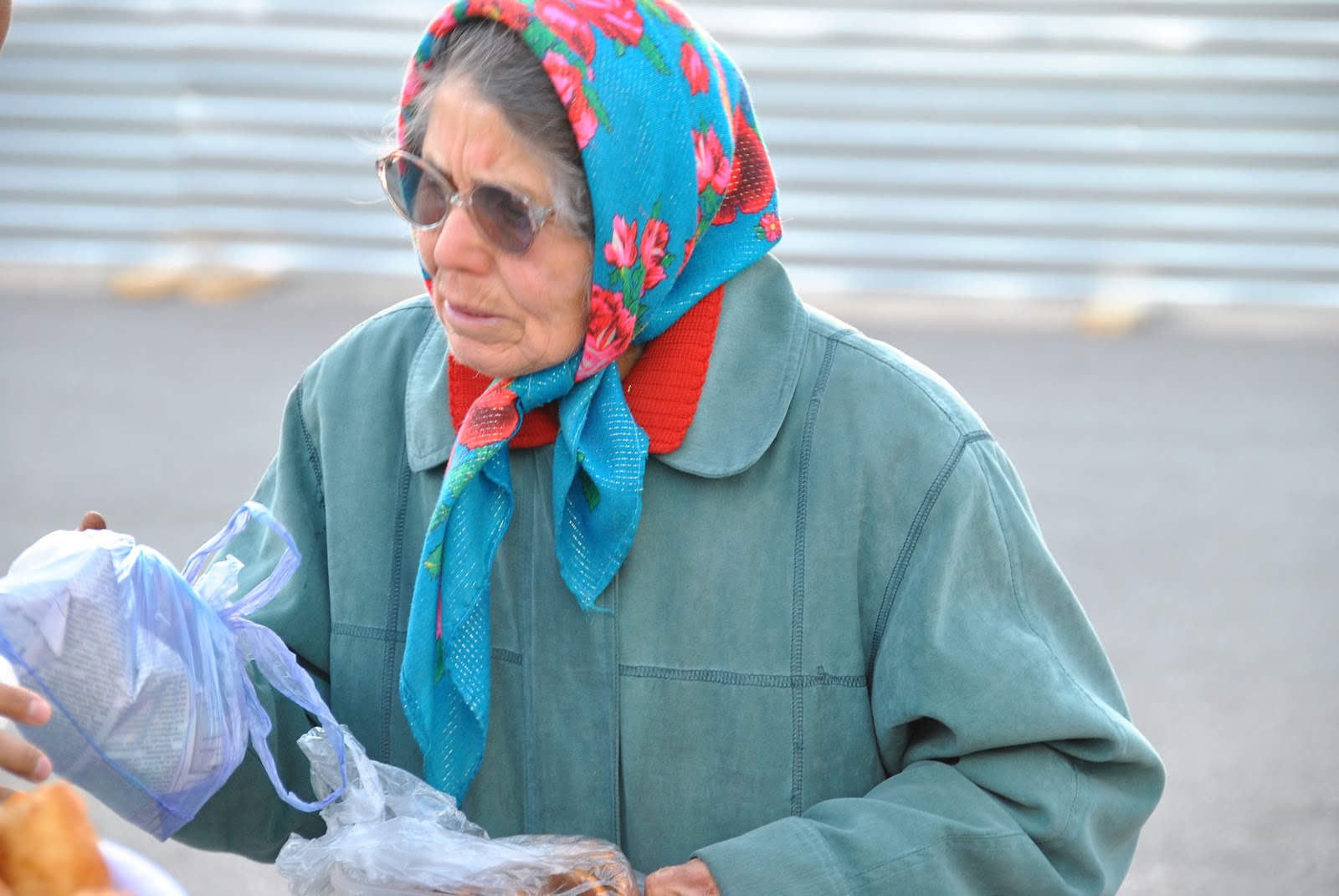
As I’m sitting here looking out the window watching the world pass by on the Trans-Siberian, I can’t help but notice how far back in time these last few days have taken me. Between all the trains passing us going the opposite direction, we go by (or fly by) small villages with houses in dark brownish colors which are actually the original wooden color of the houses, thou they’re partly rotted away. Every now and then thou, there’ll be a bright green or turquoise (which seem to be the hip color in Siberia) house in the middle of them all, breaking up the somewhat sad scenery. It’s like a hint of fresh air. The houses contain maximum two rooms, if not only a one­ room, and I doubt the windows (which there seem to be a lot of) are all closable. Amongst the stray mixed-bred dogs, wrecked cars and a lady tucked into several layers of clothing and a scarf wrapped around her head, you can actually spot a family life where the backyard is the centre of attention.  The gardens are neat and very well attended to, as it probably is where they get both their food and drinks from. You can see fields of potatoes, cabbage and carrots, and by the food we’ve bought of these sweet old ladies at the different stations, we all agree that they’re wonderful cooks. Cabbage dumplings and fresh bread is heavenly to all of us being stuck at a train with a restaurant where they don’t speak a word of English and where utensils and ovens tend to break down all so often – except when the party of French ppl are about to eat.

Russian seems so far away, and ppl keep asking how long it’ll take to get there. Truth is it’ll take longer to get to Greece from Norway than to Russia by plane. Russia is very close in distance, but at the same time very far away. It’s quite a different life these ppl live compared to us. We all get out at every station to get some fresh air (which is a luxury after three days on a train), and the scenery I meet almost makes me feel ill sometimes. To think that these ppl hang around the station all day with their food and beverages waiting for the trains to arrive so they can earn some money to be able to make food to sell the following day makes me feel filthy rich. They sell their food amazingly cheap and still I hear ppl bargaining with them over dumplings which are 50 rubles (10 kr), only wanting to pay 40 rubles (8 kr). To us it’s random money lying around in our pockets, lucky if they ever get used. But to these women it’s a matter of being able to buy and grow the ingredients needed to make the food that insures their income. Usually our stops are around 15 minutes, but when the train is running late we stop only for a few minutes which don’t leave us with enough time to fill our lungs with fresh air or buy some food. The disappointment is written all over the old ladies’ faces, as they probably see half a days’ income pass by.

Right now the trees are still green, going on red and yellow, surrounding the tiny houses as if their protecting them from the rest of the world. They all look like puppet houses you see on children shows, made out of clay – a bit deformed as they should be – only here they’re real and still halfway-collapsed. It seems you’re lucky if you still have a complete wall which at least will give you some protection when the cold, expected winter hits Siberia. This is home; a battle to survive relying on ppl buying your goods of a train which you’ll never afford to get on, best of luck.

Welcome to Siberia.


Metro Moscow

If you ever go to Moscow I advise you to stay underground. Don’t bother going to the Kremlin, Lenin’s tomb (he’s dead you know) or the Red Square for that matter, which by the way is not red (red in Russian thou also means beautiful, so it’s a choice of interpretation I guess). Only tourist sight over ground worth seeing is the wonderful cathedral of St. Basel. It looks like a castle with sugar coated pop stickle-onions on every tower, and you feel like licking it or taking a bite out of it rather than taking its picture. It’s now been renamed as Kiki’s church, since I’ve been talking about it a bit too often I suppose ever since we got to St. Petersburg.

The true attraction thou is the Moscow metro, being the busiest metro in the world. No matter the time of day it’s packed with ppl going on and off, whether it’s a Sunday evening, Saturday morning or rush hour during the week; the flow of ppl is constant. The mantra being: don’t lose your travelling companion! The metro is a web of different lines taking you all over Moscow thru stations that aren’t always logic in which way they go, and the stations being only in Cyrillic doesn’t really help especially when you have a map that’s phonetic. Needless to say, this brought some confusion with it and the light blue line is from now on the color of evil (according to a Swede) since a few managed to get lost somewhere between the dark and light blue line. They were either on the wrong train in the right direction, or on the right train in the wrong direction. It’s been the source to many great laughs ever since.

The Red Sqaure

Kremlin

Red Square at night
St Basel at night
Red Square at night
Starbucks :)
Breathtaking St Basel

The enormous amount of ppl also bid you a few challenges. When travelling in a group of 15 ppl, getting them all on the same metro seems impossible at times, thou important since the names of the stations are quite hard to make out if you’re not fluent in Cyrillic. The first day in Moscow a Canadian jumped on the train because he thought we were all getting on, which we were, but when the doors on the metro close they close even thou you’re stuck somewhere in the middle. We managed to signal him that we were going five stops, hoping that he could count, which apparently he could. Not everyone could count thou it turned out. When we were heading to the Trans-Siberian train we all had to get on the metro with our huge backpacks (remember, the metro’s ALWAYS packed), which wasn’t extremely popular amongst the Russians. We were suppose to get off at the fourth stop on the blue line (not the light blue, but the dark blue) to switch to the brown line that would lead us to the train station. We got to the station the brown line had taken us to and started walking, before we realize that we were two ppl short. The rest of the group walked to the train station, while I and a Belgian stayed behind to keep a look-out for the two missing. We were standing on top of a long staircase looking into the massive crowd streaming towards us every time a train arrived, which was more or less every minute. They looked like black smoke moving in close ready to overrun us, and as soon as we could get a glimpse of the floor another train gulped up more ppl. Finally the missing girls arrived, having gotten off one stop too early. Counting is hard when you’re squeezed into a metro cart with unimaginably many ppl.

We also met some of the nicest ppl in all of Russia (so far) on many of our metro rides. We’re travelling with an English woman who’s 78 years old. This is quite a dame and she’s everyone’s’ granny.  As soon as we would enter the carts, someone – usually an elderly man – would jump up and offer her his seat. They’re very chatty as well and they kept talking to us all the way, even thou they couldn’t understand us and vice verca. We also experience a couple of the guys getting off at the same station as us, just to make sure she got off ok. She’s given away a lot of thankful hugs and gotten a lot of admiring kisses in return.

Apart from being the place where all the action is, the metro is in itself an experience. It’s filled with art and culturally hidden messages. Every detail is taken into consideration when being built, with chandeliers, bright colors, statues, golden couples and mosaic pictures as beautiful as can be, not to mention being the cleanest metro I’ve ever seen. We went on a metro safari (as it ended up being called) bouncing from one station to another, being amazed and astounded over and over again. It was like moving from one wow-moment to another. It’s what you can call low-budget sightseeing with a very rewarding experience.

Don’t underestimate the metro!
A sample of pictures from the metros